


In October, Elon Musk’s Starlink was back in the news. Ukraine’s access to the satellite communications network had once again been curtailed, following a previous restriction in 2022. Questions swirled about who was behind it: Musk himself, or the US government under Donald Trump.
There are in fact two Starlink services on offer to countries like Ukraine. There’s the commercial version we know by that name, but there’s also Starshield, the defense-oriented one that the US government has a lot more control over. Musk admitted he did limit Ukraine’s access to Starlink, but Ukrainian President Volodymyr Zelenskyy also suggested the US government was behind the restrictions placed on its access to Starshield. Once the service was restored, the truth of that claim was left unresolved.
The incident revived an unresolved issue from the original shutdown four years earlier: how was it that one man could wield so much power over the communications infrastructure of sovereign countries, not to mention that so many people depend on? At the time, it seemed clear that something was going to have to be done about it, but then the urgency behind that effort seemed to wane.
European countries, along with Canada and many others, are now once again calling for an alternative to Starlink and to reduce their dependence. In the aftermath, Finnish lawmaker Aura Salla said the speed restriction was “yet another example of a kill switch” that the US and its tech companies could wield over Europe. The US government quickly shot back with threats of retaliation if Europe brings forward any restrictions on Starlink. It’s hard to know whether those European ambitions will ultimately bear fruit.
It seems to be when these restrictions bleed into the realm of national security that politicians, and much of the public, start to take them seriously. But I would argue the real threat presented by Starlink is far greater, and has long been ignored until some recent statements by Musk and moves by SpaceX that have made it more real. I’m talking, of course, about the ambition to make Starlink a mobile service provider in its own right, directly challenging traditional telecommunications companies in the United States and beyond.
Starlink’s expansionary ambitions
Starlink has been offering satellite internet services in some form since 2020, slowly expanding to new markets and improving the quality of the service. At this point, it’s not uncommon to find people in rural areas or industries that operate in remote regions depending on it for connectivity. But it previously tried to position that offering for an even wider market. In 2022, it tried and failed to get $886 million in subsidies to provision rural internet services from the Federal Communications Commission. The agency didn’t feel it could “deliver the promised service.”
But Musk’s ambitions didn’t end there. The following year, SpaceX started signing agreements with mobile providers in different parts of the world, like T-Mobile in the United States and Rogers in Canada. While the telecommunications firms would still provide terrestrial connectivity, Starlink would supposedly fill in the gaps with satellite service in the areas their networks didn’t reach. Even then, there were worries that Starlink would seek to go even further.
To provide service to mobile phones, a company needs to get licenses to access radio spectrum. SpaceX started buying up those licenses last year in the United States through acquisitions instead of participating in spectrum auctions, then picked up even more through 2026.
 Paris Marx
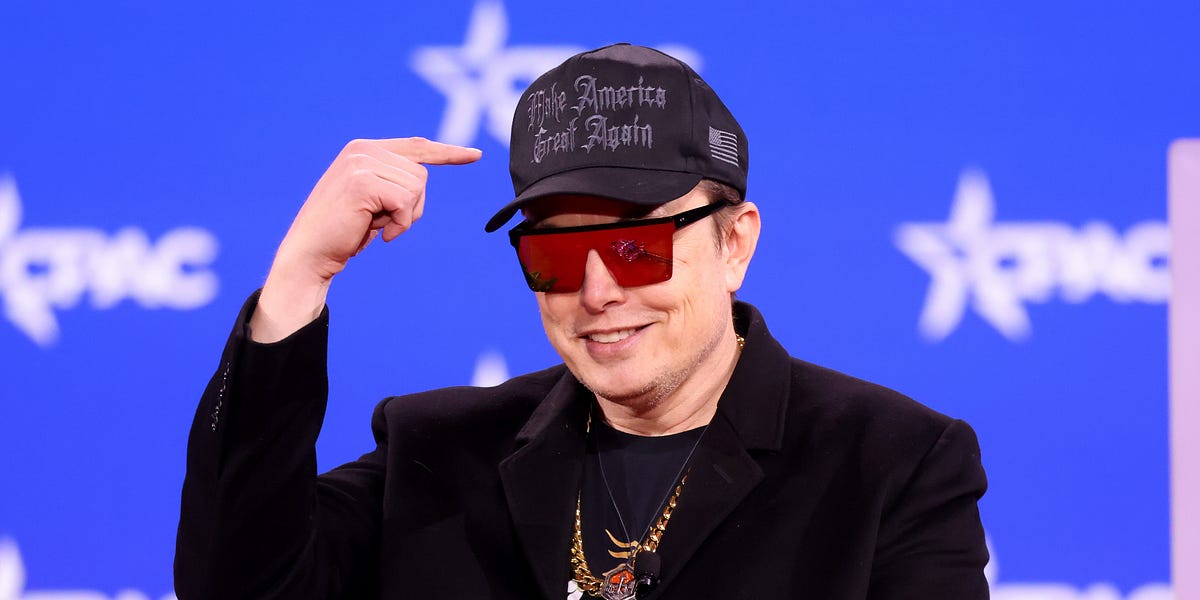
The company’s intentions have become much more public in recent months, with SpaceX President Gwynne Shotwell saying in August it intends to “build out the terrestrial component” of the network and Musk openly championing plans on social media. In October, SpaceX started looking for deals to secure 80,000 cell towers in the United States, then looked at buying Boost Mobile to give a boost to its efforts in early November. It also signed an agreement with Qualcomm to use its technology in Starlink’s terrestrial network.
In the United States, telecom companies have been downplaying the threat posed by Starlink Mobile. “We should not get totally panicking here,” said Timotheus Höttges, the CEO of T-Mobile’s parent company Deutsche Telekom. But in Europe, Deutsche Telekom is part of a coalition of providers, including Orange, Telefónica, and Vodafone, which are planning to buy up the spectrum needed to provide satellite mobile coverage to challenge Starlink’s primacy, likely through a future partnership with French satellite operator Eutelsat.
The risk’s of Starlink dependence
Telecom companies aren’t the easiest corporate actors to defend. People complain constantly about poor coverage, slow service, and prices that can be far too high — depending on the country they operate in, that is. But it’s hard for me to see what Musk is planning with Starlink Mobile, and not think about the experience we had with Uber almost twenty years ago.
Uber rolled into markets across the United States and around the world, promising to be a better alternative to taxis. Many of the promises the company made — especially that they’d do right by the drivers that made their service possible — turned out to be lies. But there was no question their app-based hailing system and the surveillance they placed on drivers did make riders feel more secure. Taxi companies and drivers also weren’t the easiest to defend: many people had bad experiences with drivers and had been ripped off when taking a cab.
 Paris Marx
Even if they wanted to, few taxi companies could effectively compete against a global operator like Uber. It was not only losing billions of dollars to undercut taxi fares — something taxi operators couldn’t replicate, because they couldn’t spend a decade running at a loss — but it could take even steeper losses in competitive markets because it had operations in many other cities it could fall back on. Ultimately, power was taken away from local governments and shifted into the hands of a small number of global and regional ride-hailing firms that further pushed down driver pay, hiked fares for riders, and never delivered the transport equity or reduced traffic congestion Uber touted in its early years.
As Starlink looks set to disrupt the telecom market, we should similarly be on guard. SpaceX lost money for years to build out its network of Starlink satellites, and even now, it claims Starlink is wildly profitable, but that’s only because it uses an accounting trick to hide the cost of the launches to get its satellites into orbit. As it looks to build out a mobile network, it will be able to rely on Musk’s deep pockets and a deep well of investors who will never say no to the Technoking — allowing it to lose money hand over fist in a way traditional telecom operators would not be able to replicate because they’re not valued the same way on the stock market.
When Starlink Mobile launches, it will undoubtedly significantly underprice the cost of its service to pull in customers from traditional telecom companies. That will erode its competitors’ customer bases, making it even more difficult for them to finance the investments needed to compete. But those discounts will not last forever, just as they haven’t for Starlink internet customers. This very month, Starlink customers have been complaining about further price hikes, including a “dynamic pricing” model that raises prices where there is less network capacity.
The threat here should be pretty obvious: the supposed introduction of new competition actually resulting in a market where prices will end up going higher as companies have to spend hand over fist to keep up. As profit margins are squeezed at traditional telecom companies because of Starlink Mobile, there will be increased pressure for those existing players to further consolidate so they try to keep up with the deep-pocketed company stealing their customers. And we all know how well consolidation tends to work out for consumers.
 Paris Marx
The broader implications of that are even more worrying. Elon Musk already wields substantial influence through his control of SpaceX, the Starlink service, and other infrastructures. If he also becomes a dominant player in the provision of mobile service, his power will only expand, making it harder to hold him to account for his harmful actions and giving him a new lever he can use to threaten governments if they try to regulate his companies. This is a threat within the United States, but it’s also a threat in other countries as Musk will inevitably try to expand the service internationally just as he has with Starlink’s satellite internet offering.
In a few years, we could be talking about the threat of Musk turning off access to his mobile network in the same way governments are now growing increasingly worried about the wisdom of depending on his satellite internet service. In this case, we have time to avert the development of that dependence by not allowing SpaceX to introduce mobile service in other countries, and doing as European operators are already trying to do in creating domestic and regional alternatives to try to match what Starlink wants to provide. For example, Canada and Europe have already announced their intentions to work more closely on space-based connectivity.
Musk’s power must be limited
It’s easy to look at the restrictions regularly placed on Ukraine and see that as the biggest threat being presented by dependence on a satellite communications network controlled by Elon Musk. But I hope I’ve convinced you, or at least made you consider whether, that threat is far great if regular people become even more reliant on his network.
Musk is going to do what he’s going to do in the United States, and it’s up to lawmakers there to deal with the domestic threats he presents. But internationally, the conversation is slightly different, and governments should be acting aggressively not just to reduce their existing dependence on Starlink — and SpaceX for rocket launch capabilities — but also to avoid an expansion of that dependence as the company seeks to begin offering service directly to mobile devices.
This is not about protecting the telecom industry. If anything, I’d like to see telecommunications services taken back into public ownership and run for the benefit of the public, not to enrich large corporations and their investors. But I think that’s a longer term project to achieve. In the short term, it’s imperative we ensure more power isn’t placed in the hands of Elon Musk, even if that means helping our existing telecom industry fend off his attempts at a takeover.


Member discussion